
A gasoline spill on your driveway can be more than just an unsightly mess; it’s a hazard that needs prompt and proper cleaning. Gasoline, with its pungent odor and ability to penetrate surfaces, poses environmental risks and can deteriorate the integrity of your driveway. Understanding how to tackle this issue effectively is crucial for any homeowner.
To clean up a gasoline spill on your driveway, quickly contain it, soak up the liquid with absorbent materials like cat litter or sand, and dispose of it safely, following local regulations. Use a degreaser and hot water to scrub the area, then rinse thoroughly.
In the coming paragraphs, we’ll provide a detailed guide on safely handling a gasoline spill,
KEY Takeaways
- Swift Containment: Immediately contain the spill with absorbent materials, preventing environmental damage and reducing slip hazards.
- Thorough Decontamination: Use a potent degreaser or specialized cleaning solution to break down gasoline; scrub vigorously, then rinse the area well.
- Prioritize Safety: Always wear protective gloves and eyewear, and ensure no flames or sparks are present during cleanup.

Safety Precautions
When learning “how to clean up gasoline spills on the driveway,” it’s crucial to prioritize safety. Here are three essential safety measures to keep in mind:
Wear Appropriate Safety Gear:
Always wear protective gloves and safety goggles to prevent skin and eye irritation from gasoline contact. Closed-toe shoes will protect your feet from accidental splashes. This gear forms a barrier between you and the hazardous material, minimizing the risk of burns, absorption through the skin, or other injuries.
Avoid Smoking Or Using Any Open Flames:
The vapors from gasoline are heavier than air and can travel along the ground, collecting in low areas, and a single spark can set them off. It’s vital to ensure that all smoking materials, open flames, including candles or barbeques, and even pilot lights are extinguished or removed from the area to prevent a dangerous fire or explosion.
Turn Off All Ignition Sources In The Vicinity:
Before you start the cleanup process, turn off engines and electrical tools nearby. This includes vehicles, lawnmowers, and any other equipment that might produce a spark. It’s advisable also to disable any automatic ignition systems, such as those found in cars or HVAC units that might cycle on and off, to eliminate any potential ignition sources.
Only after making sure the environment is completely safe should you begin the cleanup process

Materials Needed
Equipped with the suitable materials, you’ll find that learning this process is a breeze. Gather the four following items before you start:
Absorbent Materials:
Using an absorbent is the first step in addressing the spill. Materials like cat litter, sawdust, or commercial absorbents are excellent for soaking gasoline. They work by absorbing the liquid, making it easier to collect and dispose of the gasoline without spreading it further.
Be generous in application, covering the entire spill, and give it time to absorb as much gasoline as possible before removal.
Cleaning Agent:
After the bulk of the gasoline has been absorbed and removed, a cleaning agent is necessary to deal with the residue. A strong degreasing detergent or a cleaner specifically designed for driveways will help break down the remaining gasoline. This is vital for preventing long-term staining.
Apply the cleaning agent according to the manufacturer’s instructions, and use a brush with stiff bristles to scrub the area thoroughly.
Water:
Water is used in the final rinse to wash away the cleaning agents and any last traces of gasoline. Using a lot of water to dilute and disperse the detergent and gasoline mixture is essential. This step is crucial to ensure the driveway is completely clear and minimize environmental impact.
Protective Gloves:
Personal safety should never be compromised. Protective gloves made of a material impervious to gasoline and chemicals should be worn throughout the cleanup process. They will protect your skin from direct contact with hazardous substances and prevent irritation or more severe damage caused by gasoline.
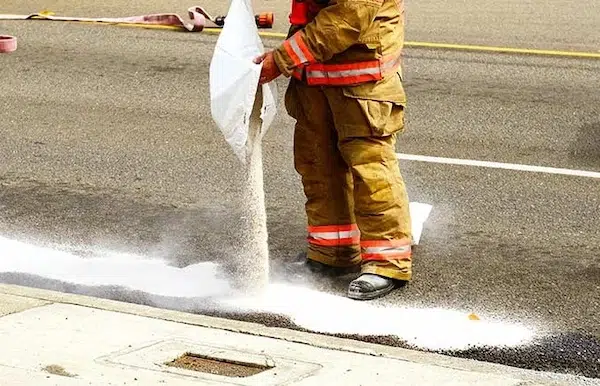
Steps To Clean Up The Gasoline Spill
By following these three steps, you can effectively clean up a gasoline spill on your driveway and ensure safety for both your family and the environment:
Contain The Spill
- Use sand or soil to contain the spill.
Quickly spread sand or soil around the perimeter of the spill to prevent it from spreading further.
- Place a barrier around the spill to prevent it from spreading
You can use absorbent pads or booms to create a physical barrier that stops the gasoline from reaching storm drains or other areas.
Absorb The Gasoline
- Use absorbent materials to soak up the spilled gasoline
Spread a porous material like cat litter, sawdust, or a commercial absorbent over the spill. Allow it to sit for at least 15-20 minutes, giving it ample time to soak up the gasoline.
- Dispose of the saturated materials properly.
Use a broom or shovel to carefully scoop the gasoline-soaked absorbent and place it in a sealable, non-combustible container. Dispose of the container according to your local hazardous waste regulations.
Clean The Surface
- Use a cleaning agent to remove any remaining gasoline stains
Mix a degreasing detergent or specialized driveway cleaner with water according to the manufacturer’s instructions to wash the driveway. Apply the solution to the stained area, scrubbing vigorously with a stiff brush to break down the gasoline residue.
- Rinse the area with water.
Use a hose or a bucket of water to rinse the cleaning solution and gasoline residue from your driveway. Ensure you thoroughly rinse the area to prevent any remaining chemicals from damaging your driveway’s surface.
- Dispose of the contaminated cleaning materials properly.
Place any used brushes, rags, or other cleaning materials in a sealable, non-combustible container and dispose of them according to your local hazardous waste regulations.
Frequently Asked Questions
1. What Neutralizes Spilled Gasoline?
To neutralize spilled gasoline, use a commercial absorbent product or household items like baking soda or cat litter. These materials absorb the gasoline and help mitigate its flammable and hazardous nature. After absorption, safely dispose of the material according to local regulations.
2. How Do You Get Dried Gas Off A Driveway?
To remove dried gasoline from a driveway, start by absorbing any residue with cat litter or a commercial absorbent. Then, scrub the stain with a strong detergent and warm water. Rinse thoroughly and repeat if necessary. Always wear protective clothing and gloves when handling gasoline.
3. Does Sand Absorb Gasoline?
Yes, sand can absorb gasoline. However, it’s less effective than other cat litter or commercial absorbents. Sand can help spread the gasoline thinner, reducing flammability, but it doesn’t neutralize the gasoline. Always dispose of gasoline-soaked sand safely and responsibly.
Conclusion
Cleaning up a gasoline spill on your driveway involves quick action to prevent the spread, using absorbent materials to soak up the liquid. A thorough scrub with a degreaser or detergent followed by a generous rinse is necessary to remove any residue. Above all, safety is paramount: protective gear should be worn, and all ignition sources should be eliminated to avoid fire hazards. Proper cleanup protects your property and the environment, ensuring that your driveway remains safe and clean.


