
Dream of a tough, affordable roof that tackles the elements head-on? Asphalt roll roofing could be your answer!
To install asphalt roll roofing, ensure your roof is clean and smooth. Lay down the first roll at the roof’s bottom, nail it down, then add more rolls, overlapping each one. Seal the edges with roofing cement to keep water out.
Let’s dive in and learn how to install asphalt roll roofing. This guide will show you the steps to strengthen your roof and prepare for any weather. Get ready to give your home the best cover it can have!
KEY Takeaways
- Measure and Prepare Roof: Ensure the roof deck is clean and in good condition before installing asphalt roll roofing.
- Install Overlapping Layers: Roll out, overlap securely, and nail down each layer of asphalt roofing for waterproof protection.
- Overlap Courses Correctly: Overlap each roll by at least 2 inches to prevent leaks, following the manufacturer’s instructions for best results.
Preparing For Installation
Inspecting Roof Deck

Take a good look at your roof deck. This is the foundation for your new roofing, so it’s got to be right. Check for any signs of damage like rot, cracks, or areas where water pools.
These issues can mess with your new roof’s ability to protect your home. Once you spot any problems, you’ll need to fix them. Sometimes, it’s as simple as replacing a few boards, but it ensures your new roof will last longer and perform better.
Gathering Necessary Tools
Before you start, gather all the tools and materials you’ll need. This list includes:
- A sturdy ladder to safely reach your roof
- A hammer or nail gun for securing the roofing material
- Roofing nails to hold everything in place
- A utility knife for cutting the roll roofing to size
- Measuring tape to get the right measurements
- Chalk line to mark where the roofing will go
- Roofing cement and a trowel or putty knife for sealing edges
Having all these tools at hand means you won’t have to pause in the middle of your work to find something you missed.
Checking Weather Conditions
Check the weather. Roofing is an outdoor job, so you’re at the mercy of Mother Nature. You want a day that’s not too hot or cold, without rain or strong winds.
Bad weather can make the job not only harder but also more dangerous. It can also affect how well the roofing materials stick to your roof. So, look at the weather forecast and pick a clear, calm day for your project.
Materials And Tools For Asphalt Roll Roofing
Asphalt Roll Roofing Sheets
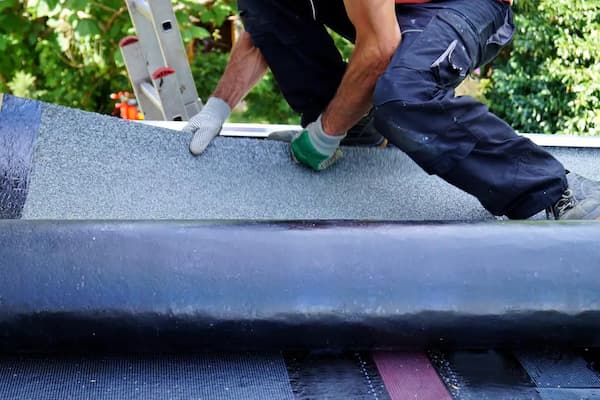
The star of the show is the asphalt roll roofing sheets. These are specially designed to cover your roof as a shield against the elements.
Made from a base mat impregnated with asphalt, they are finished with a mineral surface to fend off rain, UV rays, and even light foot traffic. When installed, these sheets overlap, creating a continuous barrier that prevents water from penetrating and damaging your home.
Roofing Nails And Hammer
No roofing project can start without roofing nails and a hammer. These aren’t your ordinary nails; roofing nails are designed with a broader head and a heavier gauge to withstand the elements and hold roofing materials firmly in place.
The hammer, your trusty tool, drives these nails through the asphalt roll roofing and into the roof deck. This combination secures the sheets, ensuring they remain flat and in position, even during strong winds.
Utility Knife
A utility knife is an indispensable tool in your roofing arsenal. Asphalt roll roofing sheets come in large, unwieldy rolls that must often be trimmed to fit your roof’s unique contours and edges.
You can easily cut the sheets to size with a sharp utility knife, ensuring a neat, professional-looking installation. The knife allows for precision cuts around vents, chimneys, and other rooftop features, ensuring every inch of your roof is covered and protected.
Roofing Adhesive
Roofing adhesive (or roofing cement) is the glue that binds your project together. This adhesive is applied to the seams and edges where asphalt sheets overlap, creating a watertight seal that prevents moisture from seeping through.
It’s also used to secure the bottom edges of the sheets to the roof, adding an extra layer of protection against uplift from wind. Roofing adhesive is essential for finishing touches, sealing around nails, and ensuring every gap is closed.
Read this informative article to know whether you can paint an asphalt roof or not.
Step-By-Step Installation Of Asphalt Roll Roofing
Unrolling The Roofing Material
- Starting Point: Begin at the bottom edge of the roof. This is important because you want the water to flow over the roofing, not under it.
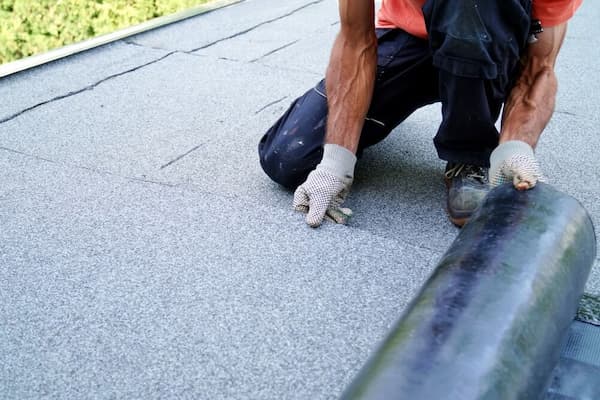
- Unroll Carefully: Gently unroll the asphalt roofing material along the length of the roof. Do this slowly to avoid wrinkles or bubbles, which can let water in.
- Lay Flat: Ensure the material lies completely flat against the roof surface. The sun will make the asphalt more pliable if it’s a warm day, helping it to lay flatter and stick better.
Aligning And Securing Edges
- Straight Edges: Make sure the edges of your roll are perfectly aligned with the roof’s sides. This keeps your roofing neat and ensures it effectively keeps water out.
- Overhang: Allow a slight overhang at the roof’s edge (about half an inch to an inch) to ensure water drips off the roof, not into the structure.
- Secure the First Edge: Once aligned, nail down the first edge of the roll. Space your nails about 12 inches apart, driving them through the roofing material into the roof deck.
Overlapping Seams Correctly

- Overlap the Next Roll: When laying the next roll, overlap it over the first by at least 2 inches. This overlap is crucial for waterproofing.
- Check Alignment: As you add each new roll, ensure it’s straight, and the overlap is consistent across the length of the roof.
- Press Firmly: Use your hands or a weighted roller to press down on the overlaps, ensuring a good bond and removing air pockets.
Nailing And Adhering Sheets
- Nail Each Sheet: After laying each roll and ensuring it’s properly overlapped and flat, nail it down. This time, space nails closer together near the edges and seams—about 6 inches apart.
- Roofing Cement: Apply roofing cement under the edges of the overlaps. This extra step helps seal the seams and prevents water from getting through.
- Final Touches: Once all the rolls are laid and nailed, go over the entire surface. Check for any loose spots or edges. Apply more roofing cement to seal around any pipes, vents, or other protrusions.
Flashing And Sealing
Installing Metal Flashing
Metal flashing is like a superhero cape for the edges of your roof. It keeps water from getting into places it shouldn’t. First, you measure the parts of your roof that need flashing, like around the chimney or where the roof meets a wall.
Cut the metal flashing to fit those spots. Then, you nail the flashing onto the roof. Make sure it’s flat and snug against the roof’s surface.
Sealing Joints And Corners
Joints and corners are like puzzle corners; they need to fit perfectly. To seal them, you use a special goo called roofing cement.
Take a big brush or a trowel and spread the cement over the joints and corners, covering them completely. This makes a waterproof seal, so rain can’t get through. Think of it like putting on a thick, protective glove.
Ensuring Watertight Seals
The last step is checking your work to ensure you did it right. Look over all the places where you used metal flashing and roofing cement. You want to make sure there are no gaps or spots you missed.
Add more cement if you find a spot that looks thin. The goal is to have a tight seal everywhere to protect your roof from water.
It’s like ensuring all the doors and windows in your house are closed before a big storm.
Trimming And Finishing
Trimming Excess Material
Tools and Materials:
- Sharp utility knife
- Straight edge (e.g., level, ruler)
- Work gloves
Procedure:
- Wait for adhesive to set: Ideally, wait 24 hours before trimming to allow the adhesive to cure and prevent tearing fully.
- Measure and mark: Use a straight edge to measure and mark an overhang of 1-2 inches beyond the edge of the roof deck.
- Cut carefully: Wear gloves for safety and use a sharp utility knife to cut along the marked line. Make clean, straight cuts, following the roof’s angle.
- Cut corners diagonally: For corners, cut the excess material diagonally at a 45-degree angle to create a clean, finished look.
- Check overhang: Ensure the overhang is consistent around the entire perimeter.
Installing Drip Edge
Tools And Materials:
- Drip edge flashing (metal or PVC)
- Roofing nails or staples
- Hammer or staple gun
- Sealant (optional)
Procedure:
- Overlap drip edge: Position the drip edge flashing so it overlaps the trimmed edge of the roll roofing by 1-2 inches.
- Secure drip edge: Nail or staple the drip edge firmly to the roof deck along its entire length, ensuring at least 1-inch spacing between fasteners.
- Seal seams (optional): For additional protection, apply a bead of sealant along the seam where the drip edge overlaps the roll roofing.
Securing Roof Perimeter
Tools And Materials:
- Metal flashing (e.g., L-flashing, W-flashing)
- Roofing nails or staples
- Hammer or staple gun
- Sealant
Procedure:
- Install flashing: Depending on your roof’s design, use appropriate metal flashing (e.g., L-flashing for walls, W-flashing for valleys) to cover the exposed edges of the roof deck and create a watertight barrier.
- Secure flashing: Nail or staple the flashing securely to the roof deck and underlying structures, ensuring proper overlap with the roll roofing and drip edge.
- Seal seams and penetrations: Apply a generous amount of sealant around all seams, penetrations (e.g., vents, pipes), and nail holes to prevent leaks.
Maintenance Tips For Asphalt Roll Roofing
Periodic Inspections
Every few months, take a look at your roof. You want to catch any problems early. Look for loose nails, parts where the roofing is coming up, or cracks. Also, check after big storms.
This way, you can fix small issues before they become big ones.
Cleaning Debris And Leaves
Leaves, sticks, and other stuff can pile up on your roof. Otherwise, when you let them sit there, they can trap water. This leads to leaks or damage.
So, get up there with a broom or a blower a few times a year. Sweep all that stuff off. Your roof doesn’t like to wear a wet blanket!
Prompt Repairs Of Damaged Areas
When you see a damaged part of your roof, fix it immediately. A small tear can turn into a big leak. You should install new roofing material or use roofing cement to seal holes. Doing this fast can save you from bigger repairs later.
FAQs
1. Can I Install Asphalt Roll Roofing On Any Type Of Roof Deck?

You can put asphalt roll roofing on many flat or slightly sloped roofs. But the roof’s bottom part must be solid and in good shape. It can’t be all bumpy or broken. Always check if your roof is okay for this kind of roofing before you start.
2. How Long Does It Take To Install Asphalt Roll Roofing?
Installing asphalt roll roofing usually takes about a day for a small team. This time can change based on how big or small your roof is. A larger roof needs more time, maybe 2 to 3 days. Good weather helps make the job faster and easier.
3. Can I Install Asphalt Roll Roofing Over An Existing Roof?
Yes, you can put asphalt roll roofing over an old roof, but only if the old roof is still flat and in good shape. This way, you save time and money. But first, check the old roof carefully to ensure it’s okay to cover it up.
Conclusion
Installing asphalt roll roofing is a straightforward, cost-effective way to protect your home from the elements. By cleaning the roof, laying down the roofing material properly, securing it with nails, and applying sealant, you ensure a waterproof barrier against weather challenges.
This DIY project not only enhances your home’s durability but also improves its appearance. Remember, taking the time to install your roll roofing correctly pays off in long-lasting protection and peace of mind.


